
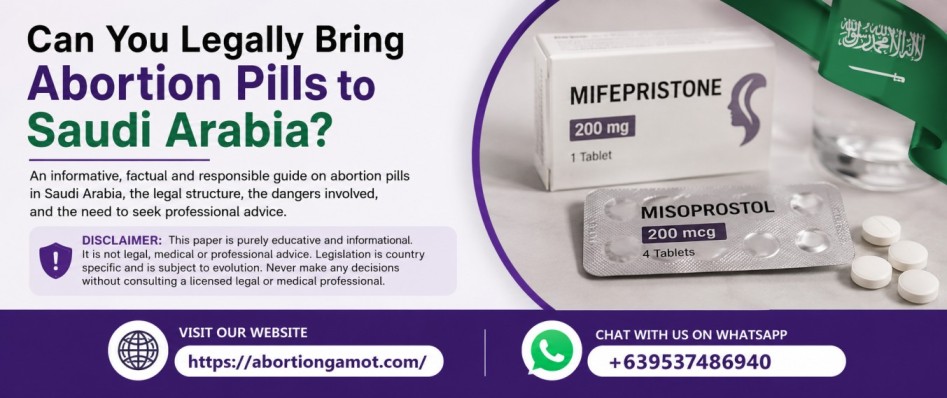
When you are going to Saudi Arabia (or you may live there) and are thinking about abortion pills, you are not alone. Numerous individuals seek such information due to real worry about their health, safety, and legal position.
This guide is an informative, factual and responsible review of what you must know about abortion pills in Saudi Arabia, the legal structure, the dangers involved, and the need to seek professional advice.
DISCLAIMER: This paper is purely educative and informational. It is not legal, medical or professional advice. Legislation is country specific and is subject to evolution. Never make any decisions without consulting a licensed legal or medical professional.
Knowledge of the Legal Framework of Abortion in Saudi Arabia
Saudi Arabia is governed by Islamic Sharia law that is the cornerstone of the legal and healthcare system of the country. Abortion in this context is viewed as a very limited medical operation – not an everyday decision.
In Saudi Arabia, When is Abortion Allowed?
Only in a few cases, abortion can be regarded according to the guidelines provided by the Saudi health authorities and Islamic scholars:
• In case the pregnancy is a serious and medically established threat to the life of the mother.
• In severe fetal deformity known prior to 120 days gestation
• Within some rape or incest, under court and physician permission.
Even in these few instances, any medical procedure has to be performed by licensed hospitals and through official permission. Illegal practices – such as self-administering abortion drugs – are not legal.
Critical Information: Elective abortion is not legal in Saudi Arabia. Any abortion related activity outside a strictly controlled medical procedure is highly risky in terms of legal prosecution.
Bringing Abortion Pills to Saudi Arabia?
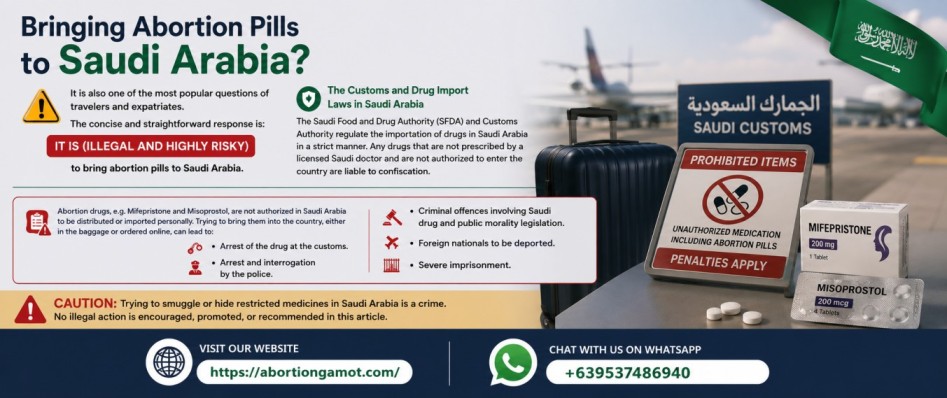
It is also one of the most popular questions of travelers and expatriates. The concise and straightforward response is: it is (illegal and highly risky) to bring abortion pills to Saudi Arabia.
The Customs and Drug Import Laws in Saudi Arabia
The Saudi Food and Drug Authority (SFDA) and Customs Authority regulate the importation of drugs in Saudi Arabia in a strict manner. Any drugs that are not prescribed by a licensed Saudi doctor and are not authorized to enter the country are liable to confiscation.
Abortion drugs, e.g. Mifepristone and Misoprostol, are not authorized in Saudi Arabia to be distributed or imported personally. Trying to bring them into the country, either in the baggage or ordered online, can lead to:
• Arrest of the drug at the customs.
• Arrest and interrogation by the police.
• Criminal offences involving Saudi drug and public morality legislation.
• Foreign nationals to be deported.
• Severe imprisonment.
CAUTION: Trying to smuggle or hide restricted medicines in Saudi Arabia is a crime. No illegal action is encouraged, promoted, or recommended in this article.
Should I Order Abortion Pills Online In Saudi?
There are those who are contemplating purchasing abortion pills online and sending them to a Saudi address. This would also be against Saudi law. Saudi postal and customs enforce monitoring on incoming packages and controlled substances such as unprescribed medications are regularly intercepted.
Legal and personal safety concerns of this method are high. In addition to legal implications, there is the grave health risk of consuming drug without the appropriate medical supervision.
Abortion Pills What Are and how do they work?
Educationally, one should know what abortion pills are and why they should be under strict medical supervision- irrespective of the geographical location.
Abortion Medication
The two drugs that are most likely to be related to medical abortion are:
Mifepristone (RU-486): It prevents the hormone progesterone, which is essential to keep a pregnancy. It is the initial drug in a two-drug combination.
Misoprostol: This drug induces contraction of the uterus to abort the pregnancy. It is also applicable as a single-use, but this is not as effective as the combined protocol.
Pills Side Effects of Abortion
Medical abortion, even when performed within the adequate clinical oversight, takes into consideration a spectrum of physical side effects. These can include:
• Intense blood loss and cramps (the process is supposed to be so)
Nausea, vomiting, and diarrhea.
• Fevers and chills especially on Misoprostol.
• Headaches and fatigue
• Uncommon: incomplete abortion that needs surgical follow-up.
• In severe instances: bleeding or infection, emergency treatment is needed.
Physician supervision is critical: Abortion pills should be taken under the guidance of a licensed doctor. Complications can be so insidious, and life threatening unless adequately managed.
The Legal Context and Abortion Pills Act in Saudi Arabia
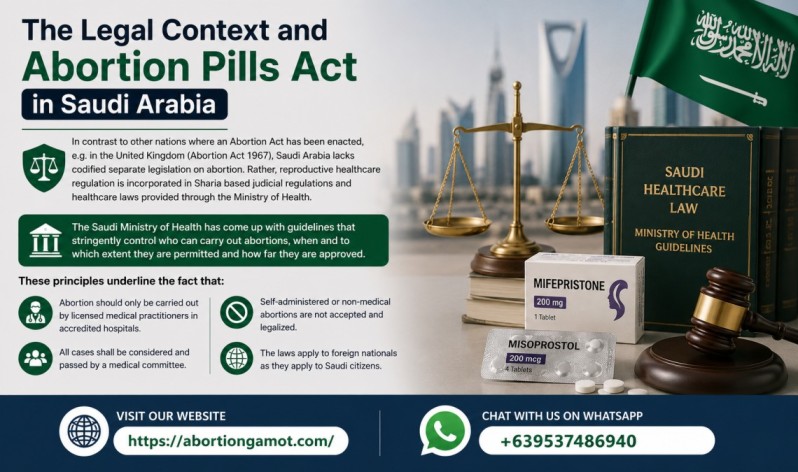
In contrast to other nations where an Abortion Act has been enacted, e.g. in the United Kingdom (Abortion Act 1967), Saudi Arabia lacks codified separate legislation on abortion. Rather, reproductive healthcare regulation is incorporated in Sharia based judicial regulations and healthcare laws provided through the Ministry of Health.
The Saudi Ministry of Health has come up with guidelines that stringently control who can carry out abortions, when and to which extent they are permitted and how far they are approved. These principles underline the fact that:
• Abortion should only be carried out by licensed medical practitioners in accredited hospitals.
• All cases shall be considered and passed by a medical committee.
• Self-administered or non-medical abortions are not accepted and legalized.
• The laws apply to foreign nationals as they apply to Saudi citizens.
Legally recognized abortion medicine in Saudi Arabia?
In the legal healthcare system in Saudi Arabia, some of the drugs that are occasionally used in an abortion process like Misoprostol can be prescribed to address other health issues (like gastric ulcers). Those medicines are however closely regulated, and they need a valid prescription, and are not legally accessible to the extent of ending a pregnancy not in a recognized medical context.
Saudi Arabia does not have any legal over-the-counter access to abortion medicine. Trying to acquire or use such drugs without the appropriate permission is a criminal offense against Saudi healthcare.
Hospitals and Specialists of Abortion in Saudi Arabia
In the case of persons who experience a complication of pregnancy or the case that might be subject to the limited exceptions under the Saudi law, the correct course of action would be to consult the matter by employing the formal healthcare system.
Where to Find Legal Medical Assistance
• Call a licensed OB-GYN in a registered hospital or clinic.
• Describe your case in detail and ask to be examined by a physician.
• When there is a medical emergency, call the Saudi emergency health services.
• In case you are a foreign citizen, your embassy as well can probably give advice on where to get proper legal medical
attention.
Abortion experts in Saudi Arabia working under the legal system have to act under the Sharia guidelines. In case your case falls under these provisions, then they are the only safe and legal thing you can do.
Notable: In case of an emergency during the pregnancy in Saudi Arabia, you can call 920 002 442 (Saudi Health Information Center) or visit the closest hospital emergency department.
What to do When You are in a difficult situation?
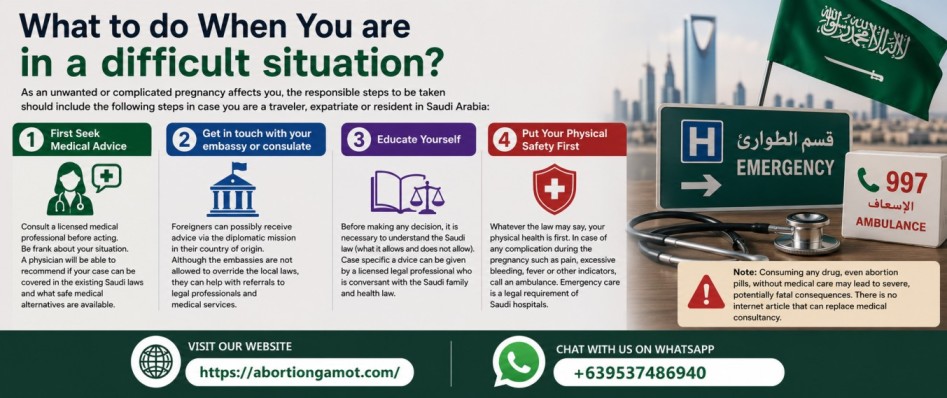
As an unwanted or complicated pregnancy affects you, the responsible steps to be taken should include the following steps in case you are a traveler, expatriate or resident in Saudi Arabia:
Step 1: First Seek Medical Advice
Consult a licensed medical professional before acting. Be frank about your situation. A physician will be able to recommend if your case can be covered in the existing Saudi laws and what safe medical alternatives are available.
Step 2: Get in touch with your embassy or consulate
Foreigners can possibly receive advice via the diplomatic mission in their country of origin. Although the embassies are not allowed to override the local laws, they can help with referrals to legal professionals and medical services.
Step 3: Educate Yourself
Before making any decision, it is necessary to understand the Saudi law (what it allows and does not allow). Case specific advice can be given by a licensed legal professional who is conversant with the Saudi family and health law.
Step 4: Put Your Physical Safety First
Whatever the law may say, your physical health is first. In case of any complication during the pregnancy such as pain, excessive bleeding, fever or other indicators, call an ambulance. Emergency care is a legal requirement of Saudi hospitals.
Note: Consuming any drug, even abortion pills, without medical care may lead to severe, potentially fatal consequences. There is no internet article that can replace medical consultancy.
Key Takeaways
• The importation of abortion pills into Saudi Arabia is not only illegal but has severe legal implications such as imprisonment,
deportation and prosecution.
• Saudi Arabia has very few, medically and judicially approved cases where abortion is legal.
• Abortion medicine is strictly regulated, and not legally available to be used at will.
• Every person that is confronted with a health problem during the course of pregnancy in Saudi Arabia is encouraged to seek
licensed medical and legal advice as soon as possible.
• Abortion pills should not be self-administered without medical care since this is dangerous to health notwithstanding the
place.
Frequently Asked Questions (FAQ)
Q1: Do you know that you can carry abortion pills to Saudi Arabia?
No. It is illegal to carry abortion pills in Saudi Arabia (whether in luggage, by mail, or any other form). Saudi customs officials are at liberty to seize unapproved drugs, and such an action can lead to arrest, prosecution, or expulsion.
Q2: Do Saudi pharmacies have abortion pills?
No. In Saudi Arabia, there are no abortion pills that are available over the counter. Some medicines such as Misoprostol can be available in another avenue of prescription but they are not legally dispensed to terminate a pregnancy.
Q3: Is Saudi Arabia legal in the issue of abortion?
In Saudi Arabia, abortion is not allowed on an elective basis. It is only allowed under strictly defined medical conditions, the life of the mother is in serious threat or in the case of severe fetal abnormality and only with the official medical and judicial consent.
Q4: What are the side effects of abortion pills?
Abortion pills may result in heavy bleeding, cramping, nausea, vomiting, fever and in an extreme situation, severe complications like hemorrhage or incomplete abortion. This is the reason why advice of a medical person is necessary whenever using these medications.
Q5: What can I do in case I require some medical assistance regarding abortions in Saudi Arabia?
A registered hospital should have a licensed OB-GYN whom you should consult. Share your health case in a straightforward manner. Should your case be one of the few exceptions of the Saudi law, an abortion expert licensed in Saudi Arabia will be able to help you through the legal procedures. Go to the closest hospital in case of an emergency.
Q6: Is it possible to order abortion pills online and get them delivered to Saudi Arabia?
No. This is illegal. Mail and packages in Saudi Arabia are inspected by the customs and illegal medications are seized. Such acts have legal repercussions, which may be harsh.
Q7: Do we have abortion hospitals or clinics in Saudi Arabia?
Saudi Arabia does not have any hospitals and clinics that carry out elective abortions. Hospitals are only permitted to help in medically warranted situations within the stringent legal and Sharia laws of the country, and after being reviewed and approved of through a formal procedure.
Q8 -Do we permit abortions in Saudi Arabia?
The only exceptions to abortion are grave danger to the life of the mother or gross malformation of the fetus, and these exceptions are allowed only with authorization of the hospital and the court. Elective abortion is not legal.
Q9 – What can you not bring into Saudi Arabia?
Saudi Arabia prohibits alcohol, pork, narcotics and illegal drugs like abortion pills. Possession of limited medication without a reasonable Saudi prescription may lead to a seizure, arrest or prosecution.
Q10 – Is misoprostol legal in Saudi Arabia?
Misoprostol is only prescribed legally on approved applications such as gastric ulcers. It is also unlawful to use or import it to terminate a pregnancy without the proper authorization and is a serious crime in the eyes of the law.
Q11 – Can I travel after a medical abortion?
Travelling immediately after a medical abortion is not advisable. They can bleed, cramp and certain unusual complications that require medical care in the area. After the procedure, you should always have your healthcare provider approve any traveling plans you have.
Conclusion
It is dangerous both personally, legally, and health-wise to even bring abortion pills to Saudi Arabia. The current laws on abortion in Saudi Arabia are based on Islamic law and only allow abortion to take place on medical grounds in extreme cases, and only under licensed medical institutions.
When you are in Saudi Arabia and you are experiencing a challenging situation with your pregnancy, the first and the foremost thing you can do is to seek immediate and qualified assistance of a licensed medical professional and in need be, a lawyer. The priority is your safety and health.
To obtain additional education on the topics of reproductive health, refer to the officially licensed medical sources in your country of residence and consult qualified healthcare providers.
This paper is an educational article. Information on this site is not to substitute professional medical or legal guidance. Medical guidelines and laws differ between countries and can change. Get expert advice, always seek the advice of a licensed professional on the specifics of your situation.