
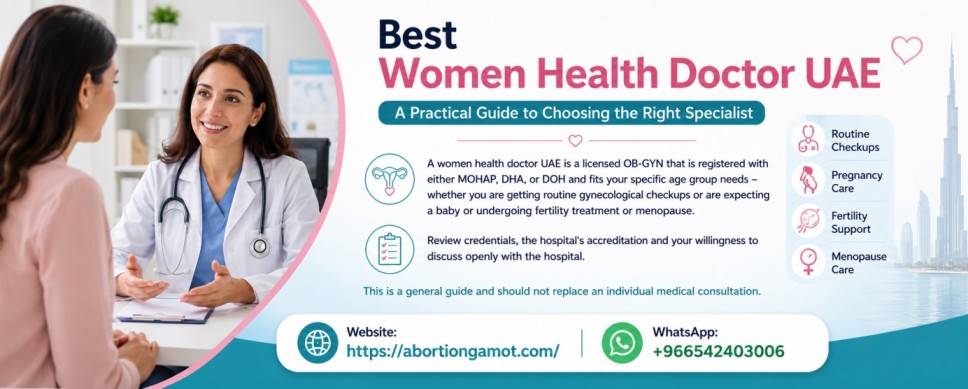
A women health doctor In UAE is a licensed OB-GYN that is registered with either MOHAP, DHA, or DOH and fits your specific age group needs – whether you are getting routine gynecological checkups or are expecting a baby or undergoing fertility treatment or menopause. Review credentials, the hospital’s accreditation and your willingness to discuss openly with the hospital. This is a general guide and should not replace an individual medical consultation.
Introduction
It’s not always easy to choose a gynecologist in a new country. There are dozens of names on clinic directories, and insurance networks create problems, and women’s health issues are perhaps the ones we most don’t want to ask out loud.
Over the last decade, UAE has developed a relatively advanced healthcare system, and hospitals in Dubai, Abu Dhabi and Sharjah have specialists from all over the world. Oversight is provided at the Federal Level by MOHAP as well as DHA (Dubai) and DOH (Abu Dhabi).
This is an overview of what a women’s health doctor does, a list of the services that are available locally, some symptoms to make a quick appointment, and a concise outline to help you narrow your shortlist.
Snapshot: Women’s Health Care in the UAE
Category | Details |
Specialty Area | Obstetrics & Gynecology, reproductive medicine, preventive women’s care |
Common causes | Hormonal changes, lifestyles, infections, and family history, as well as natural aging |
Symptoms to Note | Irregular periods, discomfort in the pelvis, abnormal discharge, trouble conceiving, changes associated with menopause. |
Severity Range | Routine and low concern to cases that require rapid specialist input. |
Diagnosis | Pelvic exam, ultrasound imaging, bloodwork, Pap test and hormone panels |
Treatment Options | Medication, minimally invasive procedures, fertility support and lifestyle coaching. |
Recovery Window | Depends on the procedure and can range from no downtime to several weeks. |
Oversight Needed | Ongoing medical surveillance since diagnosis to follow-up. |
What do health doctors for women do?
An obstetrician gynecologist—also known as a women’s health doctor—carries out treatment on the female reproductive system, combining obstetrics (pregnancy and delivery) with gynecology (reproductive and hormonal health), from adolescence up to the post-menopausal years.
How the role is defined
A women health specialist UAE should be licensed by the relevant authority from the emirate where they are going to practice and board certified. Some also have a subspecialty such as reproductive endocrinology, maternal-fetal medicine, etc.
Analyze the reasons why a specialty exists
The aim is to have continuity of care over the decades, and a consistent doctor-patient relationship makes it easier to see the subtle changes early on.
Key Women’s Healthcare Services Available in UAE
The annual exam is not the only area where women can seek health care services in United Arab Emirates.
Everyday Gynecological Care
• Check-ups for wellness and cervical screening
• Consultations and birth control procedures are provided
• Sexual health and awareness awareness sessions
• HPV vaccination scheduling
Pregnancy Care UAE
This includes antenatal check-ups, ultrasound checks, management of high-risk pregnancies and postpartum follow-ups with an OB-GYN UAE doctor.
Fertility Specialist UAE Support page to learn more
Those who are trying to get pregnant often visit fertility clinics for the following procedures: Ovulation monitoring, hormone testing, IUI, and IVF.
Menopause Care UAE
This phase usually consists of hormone tests, symptom control and long-term bone and heart health planning.
When to Seek a Women’s Health Specialist?
Some visits are scheduled, others are triggered by a feeling that something is amiss.
Scheduled, Routine Visits
• Annual health exam, beginning in adolescence
• Assessing and planning prior to the attempt to conceive.
• Initial prenatal visits after becoming pregnant.
Visits are made due to symptoms
• Any unusually heavy, painful, or irregular periods of menstruation
• Abnormal discharge such as: unusual color, texture or odor
• Recurring pain in the lower abdomen or pelvis
• No pregnancy after a year of trying
• The symptoms of menopause that interfere with everyday activities
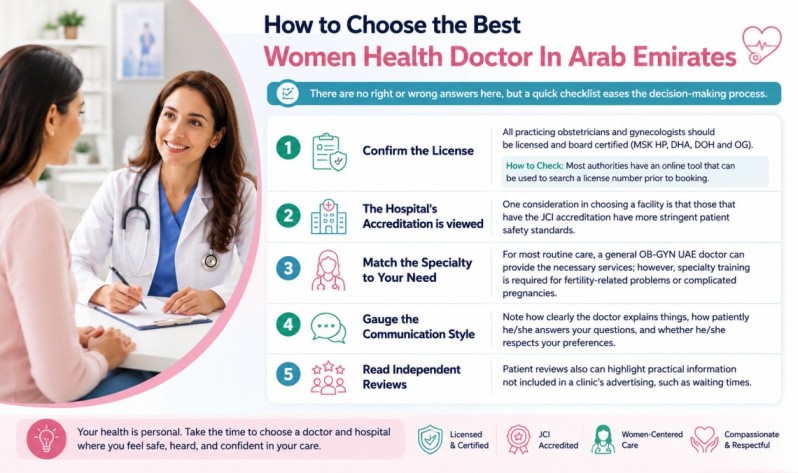
How to Choose the Best Women Health Doctor In Arab Emirates
There are no right or wrong answers here, but a quick checklist eases the decision-making process.
1. Confirm the License
All practicing obstetricians and gynecologists should be licensed and board certified (MSK HP, DHA, DOH and OG).
How to Check
Most authorities have an online tool that can be used to search a license number prior to booking.
2. The Hospital’s Accreditation is viewed
One consideration in choosing a facility is that those that have the JCI accreditation have more stringent patient safety standards.
3. Match the Specialty to Your Need
For most routine care, a general OB-GYN UAE doctor can provide the necessary services; however, specialty training is required for fertility-related problems or complicated pregnancies.
4. Gauge the Communication Style
Note how clearly the doctor explains things, how patiently he/she answers your questions, and whether he/she respects your preferences.
5. Read Independent Reviews
Patient reviews also can highlight practical information not included in a clinic’s advertising, such as waiting times.
The UAE was home to top doctors for women’s health
Remember, this is just a trial list, as there are more specialist OB-GYNs available in the UAE, and all of those listed here are affiliated with an accredited hospital. This is not a definitive or prioritised list but rather a sample of a list that you should look into more depending on your location and need.
Dr. Fathiya Abodiba, Al Salam Hospital
General gynecological practice with the hospital.
Profile: Al Salam Hospital
Dr. Shalini Verma, Emirates Specialty Hospital, Dubai
Over 10,000 deliveries, including high risk, VBAC and Infertility, with 19 years experience.
Profile: Emirates Hospitals Group
Dr Sunita Arora, JTS Medical Centre, Dubai, UAE
20+ years of experience, MRCOG (UK) MRCPI (Ireland) member with emphasis on cosmetic gynecology and infertility.
Profile: JTS Medical Centre
Dr. Zofia Gordon, Medcare Women & Children Hospital, Dubai
Graduated from medical school in Lodz, Poland in the specialty of general obstetrics and gynecology.
Profile: Medcare Hospitals & Medical Centres
Dr. Meltem Tank, Abu Dhabi
20 years of experience based in high-risk pregnancy, menopause management and gynecological cancer screening.
Profile: Emirates Hospitals Group
Dr. Aisha Al Mukhtar, (Reem Hospital, Abu Dhabi)
Member of Royal College of Obstetricians & Gynaecologists (London) for more than 15 years with experience in general and prenatal medicine.
Profile: Reem Hospital
Please check with MOHAP, DHA or DOH for the current license status of a doctor before booking, as affiliations can vary from time to time.
Common health issues and treatment for women
Avoid giving birth after the 36th week of pregnancy
PCOS and endometriosis are also common conditions and are typically treated with medicines, lifestyle changes and small surgery.
Managing PCOS
Treatment involves hormone regulation and metabolic and weight support.
Managing Endometriosis
Treatment is primarily pain management and hormonal therapy, and surgery is only recommended in advanced cases.
Difficulty Conceiving
UAE clinics for fertility specialists examine both partners, attempt to discover the root cause and begin with the least intrusive treatment.
Pregnancy Complications
Gestational diabetes, preeclampsia, and other high-risk conditions need extra attention and may need to be treated by a maternal-fetal medicine specialist.
High Risk Pregnancy Monitoring
This typically involves more frequent ultrasounds and lab testing than what is usually done.
Menopause-Related Changes
Hormone therapy is used as a treatment if appropriate, in conjunction with lifestyle advice to deal with hot flashes, mood changes and bone density loss.
Protecting Bone Density
After menopause, women can prevent or reverse bone loss by taking calcium, vitamin D and starting a weight-bearing exercise program.
Preventative Women’s Healthcare is incredibly important
The UAE preventive women’s healthcare programs are because it’s easier to treat a problem early than it is to treat a problem late.
Screenings Worth Scheduling
An annual checkup of the pelvic area using a Pap test should be performed.
Thorough examination of the breast (after age 40, mammography is performed)
Bone density testing is carried out around the time of menopause.
Physical measurements such as blood pressure, sugar and cholesterol tests are also performed.
What is causing the following conditions?
Biological Drivers
Most of what we observe in clinic is due to hormone changes, genes and natural reproductive ageing.
Day-to-Day Lifestyle Factors
All of these – diet, exercise, chronic stress and sleep – are factors in cycle regularity, fertility and hormone balance.
Related Medical Conditions
Reproductive health issues frequently intersect with thyroid issues, diabetes and autoimmune conditions and require a coordinated approach.
How these Conditions are Diagnosed
The Initial Consultation
The majority of diagnostic approaches begin with a comprehensive health history and physical exam and are tailored to the results.
Laboratory Practice and Imaging
• Pelvic or transvaginal ultrasound
• A blood test to measure hormone levels.
• HPV Testing with pap smear; recommended for women over 30
• When required, hysteroscopy or laparoscopy will be used.
A number of treatment options are on the table
Medical Approaches
• Hormonal drugs (such as contraceptives)
• This is necessary because infections can be treated with antibiotics or antifungals.
Supportive and Lifestyle-Based Care
• Adhering to a diet and managing weight using a guided approach
• To manage stress and improve sleep habits
• In appropriate cases, Pelvic Floor Physiotherapy is done.
Safety and Risk Factors to Keep in Mind
Patients may experience side effects that they notice
• Slight nausea or mood changes due to hormone treatment
• Symptoms not lasting beyond the initial procedure.Immediate pain following a minor procedure.
Head and neck pain, nausea or vomiting, and fever
• Bleeding which does not stop
• Sudden and severe pelvic or abdominal pain.
• In a separate combination:
General Precautions
All treatment plans should take into consideration your complete health profile, any existing medications you are using and your allergies, under the supervision of a qualified doctor.
Key Takeaways
• Consider a doctor who is board-certified and licensed who specializes in the type of medical condition that you are dealing with, and who is appropriate for your age.
• Most problems can be identified through regular screening, sometimes before symptoms even appear.
• Each pregnancy, fertility and menopause requires a slightly different approach to care.
• Avoid postponing a visit to a doctor because you are experiencing symptoms that seem more than normal or more serious.
A word of caution: it is important to find a qualified expert
If you are choosing between specialists, as listed in this guide, or a gynecologist who works at the hospital, it is worth taking the time to check out the specialist’s credentials and look at patient reviews.
How many people need to be Extra Cautious?
Groups at Higher Risk
• Women who had previously had a high-risk pregnancy.
• People with hormonal and autoimmune disorders
• Women age 40 and older who are considering hormone therapy.
Contraindications Worth Discussing
Women with some heart, blood clotting, or liver problems may not be made up for some hormonal therapies. A complete medical history should be performed prior to beginning any new activities.
Recovery and Aftercare
A Rough Timeline
Recovery is different for each procedure, with an easy checkup having no downtime, a minor procedure having a short downtime, and surgery having a longer downtime of several weeks.
Aftercare Basics
• Follow your doctor’s directions carefully.
• Make sure to follow up with the appointment after treatment.
• Mark it up immediately for any unusual things
Prompt Follow-Up Care
Red-Flag Symptoms
• In severe cases, there is sudden, severe pain in the pelvis and abdomen.
• A significant amount of bleeding that drips through the protection in less than an hour
• Fainting, lightheadedness or other indications of very heavy bleeding.
• A fever and pain in the pelvis area
If any of these apply, go to the nearest emergency room, not wait for a regular appointment time.
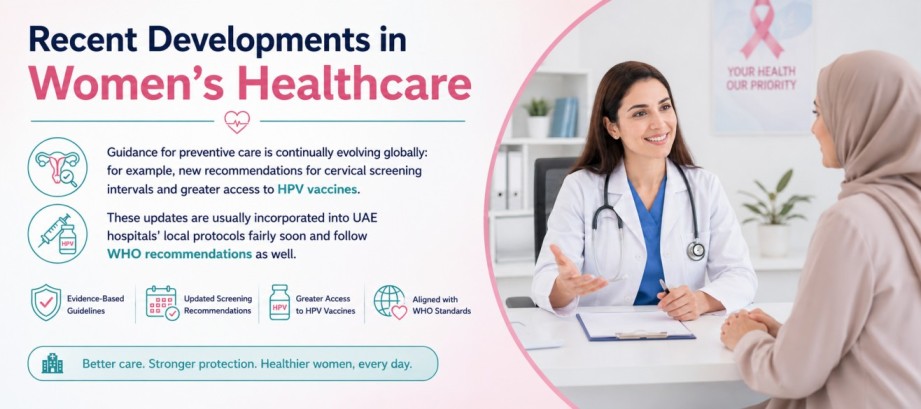
Recent Developments in Women’s Healthcare
Guidance for preventive care is continually evolving globally: for example, new recommendations for cervical screening intervals and greater access to HPV vaccines. These updates are usually incorporated into UAE hospitals’ local protocols fairly soon and follow WHO recommendations as well.
FAQ About Women’s Healthcare in UAE
Where can I find a women’s health specialist in UAE?
See MOHAP license lookup, DHA or DOH, hospital accreditation and patient reviews before booking a stay.
So what’s the difference between a gynecologist and an OB-GYN?
A gynecologist specializes in the care of reproductive health, while an UAE OB-GYN doctor is responsible for the care of pregnant women and babies.
When should I see my dentist again?
For a normal healthy adult, once a year; more often if they have a medical condition to manage or during pregnancy.
Can expats get fertility treatment here?
Yes, in most cases UAE fertility specialists clinics accept residents or visitors, but it varies depending on the clinic.
Are there private clinics that provide menopause care?
Yes, there are public and private specialty practices offering menopause care UAE.
Is there a Gynecologist who doesn’t require a referral?
This will vary based on your insurance plan — some will need a GP referral, others will be able to be booked direct with the specialist.
Conclusion
The search for the best women health doctor In UAE is not a quest for the top doctor, but rather a search for the best doctor for you at this moment, whether you are looking for routine care, prenatal care, fertility care, or menopause care.
This is a reasonably broad pool of qualified specialists under MOHAP, DHA and DOH’s supervision in the UAE. Just a few more minutes checking a license and hospital accreditation can make a big difference. Do you need any help visit our website or contact us.
All of this information provided in this guide is for general education purposes only. If you have any decision to make regarding your health, consult directly with a licensed health care provider.
Relevant UAE Healthcare Law
Federal Decree-Law No. 4 of 2016 Concerning Medical Liability (as amended) applies to patient care and provider conduct in the UAE. This law mandates the use of malpractice insurance and provides a formal complaints process for any person who has a concern about the care they received at the hands of a licensed practitioner at the health authority where the practitioner works.
Medical Disclaimer
This article is for educational purposes only and is not a replacement for professional medical advice, diagnosis or treatment. Seek the advice of a trained health care provider for any health-related issue involving women and contact the local emergency services immediately for an emergency.