
Understanding Female Reproductive Health in Oman
Women’s health is one of the most crucial factors in building a healthy society. In Oman, there have been many impressive developments in terms of provision of services related to gynaecology and reproductive health care. No matter if you are a young woman going for your first ever gynaecological checkup, a pregnant woman or suffering from some reproductive conditions – it will be highly beneficial to know where you can get necessary help and what to expect.
The female reproductive specialist, medically referred to as the Obstetrician-Gynaecologist (OB-GYN), specializes in the diagnosis, treatment, and management of conditions affecting the female reproductive system. As Oman continues to see advancements in its healthcare sector, there are a number of reproductive health specialists operating from various public and private facilities in all governorates in Oman.
This guide provides evidence-based and reliable information on reproductive health care options in Oman, the right specialists to contact and the diseases/conditions they commonly diagnose and treat, in easily understood language.
⚠ Important Note — The information in this article is for general health education purposes only. Does not provide a substitute for professional medical advice, diagnosis or treatment. All medical decisions should be taken in consultation with a licensed qualified doctor or gynaecologist who is registered with the Ministry of Health in Oman. Please contact your healthcare provider immediately for reproductive health issues.
What is a Female Reproductive Health Doctor?
A female reproductive health doctor is also known as an Obstetrician-Gynaecologist (OB-GYN). It is a doctor who has undergone additional specialisation in both obstetrics and gynaecology. Obstetrics involves the management of pregnancy, childbirth, and postpartum care, while gynaecology involves the management of all aspects of female reproductive health throughout one’s life, starting from adolescence till postmenopausal age and beyond.
As per MedlinePlus (National Library of Medicine, US), OB-GYN doctors have gone through extra education to be able to take care of pregnancy, diseases affecting reproductive organs, and other women’s health-related matters. Most women opt for OB-GYN as their physician of choice for general care and screening.
In Oman, OB-GYN doctors are required to be licensed medical professionals. They are found working at various places from the high-profiled Royal Hospital Department of Obstetrics and Gynaecology in Muscat to district hospitals of Salalah, Sohar, Barka, and other places.
Reproductive Health Specializations
• Obstetrician-Gynaecologist (OB-GYN) – in charge of handling problems associated with pregnancy and gynecology.
• Reproductive Endocrinologist — handles hormone and fertility problems.
• Perinatologist (Maternal-Fetal Medicine) – deals with high-risk pregnancies.
• Gynaecologic Oncologist — is responsible for diagnosing and treating cancers in reproductive system.
• Urogynaecologist – helps women in bladder and pelvic floor problems.
Women’s Reproductive Health in Oman
The Sultanate of Oman has been actively improving the outcomes of reproductive health care of women as part of their Vision 2040 development strategy. The Ministry of Health (MOH) acts as the main governmental authority regulating the reproductive and maternal health services, including managing the hospitals and clinics at the national, regional, and local levels in all of the governorates.
One of the significant events in 2024 took place at the end of February when the Sultanate opened the first government fertility centre in Khoula Hospital’s Al Wattayah Obstetrics and Gynaecology Complex, Muscat, by the Royal Decree No. 10/2024. This advanced center provides the most modern laboratories for diagnosis and treatment of infertility problems in couples.
In addition to that, the Oman MOH offers family planning programs for free since 1994, leading to a decrease in the birth rate and an increase in the age at which women give birth — information collected every year by the Ministry as part of its report to the CEDAW, UN Committee on the Elimination of Discrimination Against Women (2024).
The Oman women can also get access to the Unified Health Insurance Policy called Dhamani that provides them with necessary healthcare services, including maternity and preventive ones.
Common Disorders Managed by Female Reproductive Specialists
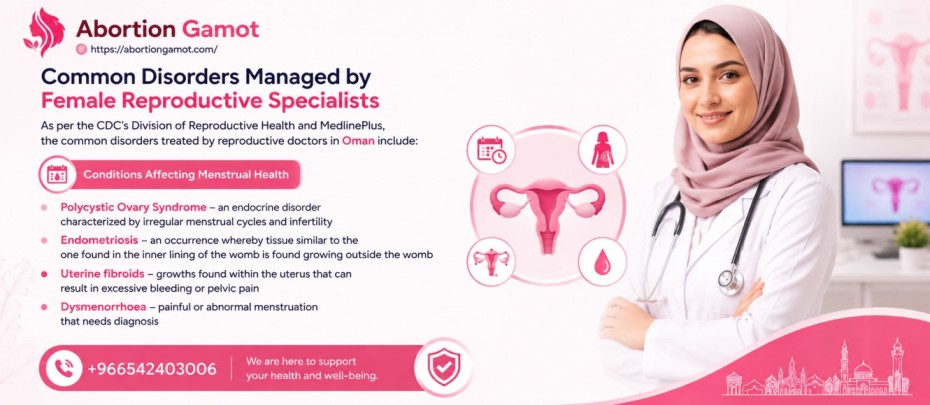
As per the CDC’s Division of Reproductive Health and MedlinePlus, the common disorders treated by reproductive doctors in Oman include:
Conditions Affecting Menstrual Health
• Polycystic Ovary Syndrome – an endocrine disorder characterized by irregular menstrual cycles and infertility
• Endometriosis – an occurrence whereby tissue similar to the one found in the inner lining of the womb is found growing outside the womb
• Uterine fibroids – growths found within the uterus that can result in excessive bleeding or pelvic pain
• Dysmenorrhoea – painful or abnormal menstruation that needs diagnosis
Pregnancy and Maternal Health
• Antenatal care (prenatal care) – routine tests during pregnancy
• Management of high-risk pregnancies – management of pregnant women with preexisting conditions such as diabetes, hypertension, heart problems, and sickle cell anemia
• Parturition (natural and caesarean delivery)
• Post-partum care
Fertility and Infertility
• Infertility Assessment – Tests to diagnose the cause of infertility in women and men
• In Vitro Fertilization and other reproductive technologies are provided at government fertility centers at Khoula Hospital and various private hospitals.
• Reproductive Endocrinology – Treatment of hormonal problems that affect fertility
Gynecologic Cancer Screening
• Cervical cancer screening – Pap smear test and HPV test to screen cervical cancer in the early stages
• Ovarian cancer screening
• Uterine and vulvar cancer can be diagnosed using clinical examination and imaging tests
The Gynecology Unit of Oman’s Royal Hospital is the only nationally recognized referral center for gynecologic oncology patients in Oman. The National Oncology Center handles all women who have any cancers related to their reproductive system.
Reproductive Health Services Offered in Oman
Many types of reproductive health services are offered by the government as well as private healthcare facilities in Oman. These include:
Service Category | Reproductive Services Offered |
Gynecology Services | Routine gynecological examinations, breast examination, pap smear, HPV test, premarital examination |
Pregnancy Services | Regular visits, growth scans, dietary advice, preparation for childbirth |
Infertility Treatment | Services including IVF, IUI, ovulation stimulation, egg freezing and sperm analysis |
Surgery Services | Laparoscopic Hysterectomy, Myomectomy, Ovarian Cyst Removal |
Menopause Treatment | Hormonal therapy, bone density scanning, lifestyle counseling |
Cancer Testing Services | Colposcopy, LLETZ procedures, pelvic ultrasounds, MRI scan |
Pelvic/Urinary Health Service | Assessment and treatment of urinary incontinence and other related diseases |
Endocrine Clinics | Services include PCOS treatment, thyroid disorder during pregnancy and diabetic ante-natal clinic |
Where to Obtain Reproductive Health Services in Oman
The network of government and private health care facilities in Oman offers high-standard specialist gynecologic care throughout the country.
Government Hospitals
• The Royal Hospital, Muscat – includes the Gynaecological Oncology and reproductive endocrinology units
• The Khoula Hospital, Muscat – where the Al Watayah Obstetric & Gynaecology Complex and the nation’s first governmental fertility clinic (2024) are located
• The Sultan Qaboos University Hospital (SQUH) – a specialized university hospital with a range of services for women
• Al-Nahda Hospital, Muscat – government women’s health services
• Regional hospitals in Salalah, Sohar, Barka, Nizwa, Sur, and other governorates
Private Hospitals and Clinics
• The Aster Al Raffah Hospital, Muscat – women’s health services that include Pap smear test, HPV testing, laparoscopy and maternity
• The KIMSHEALTH Oman – complete OB-GYN services from premarriage to postmenopausal treatment
• The Muscat Private Hospital – Department of Obstetrics & Gynaecology
• The Burjeel Hospital, Muscat – gynaecology and obstetrics services
• The Badr Al Samaa Hospitals – operates in Al Khoud, Barka, Sohar, and elsewhere in Oman
If you are going to choose a reproductive health specialist, then it is necessary to check whether the physician is licensed by the Ministry of Health of Oman. All private physicians’ activities are controlled by the Directorate General of Private Health Establishments of the MOH.
When to Consult a Female Reproductive Specialist?
Many women do not know at what age to consult a gynecologist and whether certain signs require medical advice. As a rule, you should make an appointment in case you have one of these symptoms:
• Irregular or painful menstruation
• Pelvic pain or discomfort
• Vaginal discharge, itchiness or unpleasant smell
• Difficulty getting pregnant for 12 months of trying (6 months for women older than 35)
• Pain during sexual intercourse
• Menopausal symptoms affecting quality of life
• Changes in breasts or appearance of a lump
• Incontinence
Whether you show any symptoms or not, women should start taking their gynecological check-up routine since they reach 21 years old or earlier if they engage themselves in sexual intercourse activities. Screening tests such as Pap smear (which tests cervical cells) and Human papilloma virus test are vital preventive tests to diagnose possible diseases timely and effectively treat them.
Increasing awareness about women’s health in Oman
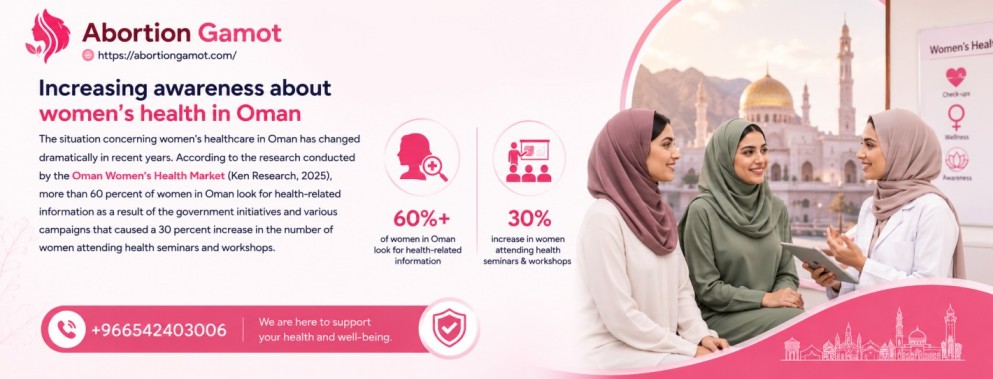
The situation concerning women’s healthcare in Oman has changed dramatically in recent years. According to the research conducted by the Oman Women’s Health Market (Ken Research, 2025), more than 60 percent of women in Oman look for health-related information as a result of the government initiatives and various campaigns that caused a 30 percent increase in the number of women attending health seminars and workshops.
The government of Oman has launched its ‘Healthy Woman’ program, investing OMR 2.5 million on women’s health care services, and there has been an increase in the number of women having health check-ups. This activity is in direct correlation with Oman Vision 2040 where health becomes one of the basic rights and sustainable development drivers.
According to UNFPA, reproductive and sexual health is described as the state of total physical, psychological, and social well-being of individuals in all aspects of reproduction. The strategy for women’s health in Oman increasingly aligns with this broad definition of reproductive and sexual health, with inclusion of psychosocial components.
Commonly Asked Questions (CAQ)
Here are answers to frequently asked questions about female reproductive doctors in Oman and women’s health services in Oman.
Q1: What does a reproductive doctor treat? |
A female reproductive physician (OB-GYN) manages a variety of conditions such as irregular periods, PCOS, endometriosis, uterine fibroids, pregnancy disorders, infertility, gynaecological cancers, pelvic floor issues and menopause. They also conduct routine procedures like Pap smear, HPV testing and other routine procedures like laparoscopy, hysteroscopy and colposcopy. |
Q2: Care free at government hospital in Oman? |
Omanis are also eligible for subsidized or free treatment in the government hospitals, including obstetrics and gynaecology. The Dhamani Unified Health Insurance Policy also provides eligible expatriates and private sector workers with access to basic women’s health services, such as prenatal care, as well as certain preventive screenings. Please be sure to confirm your coverage in advance. |
Q3: Is it possible to find a female gynaecologist in Oman? |
Yes. Recognising the cultural comfort needed in women’s health care, many hospitals and clinics in Oman have specialized female OB-GYN. Women consultants are also posted at hospitals like Aster Al Raffah, KIMSHEALTH and Royal Hospital. Please specify a female doctor when making appointments and staff will do everything to meet this need. |
Q4: What is Khoula Hospital’s fertility centre? |
Oman’s first government fertility centre is the fertility centre at Khoula Hospital opened in February 2024 under Royal Decree No.10/2024. It’s situated in the Al Wattayah Obstetrics and Gynaecology Complex, Muscat, and offers diagnostic and therapeutic services for couples who are experiencing fertility issues. It treats about 1000 cases a year, and is seeking to expand to 1500 cases a year. The referrals are from all OB-GYN departments in the governorates. |
Q5: What’s the best age to get my first pap test? |
Women are recommended to have their first Pap test when they are 21 years old or younger if sexually active. In the period after the initial normal Pap test, a Pap test may be taken every 3 years or every 5 years if there is an HPV test. Your doctor will recommend a course of treatment for you based on your medical history. If the cancer in the cervix is picked up early by regular cervical screening, the risk of developing cervical cancer is significantly reduced. |
Q6: Does Oman offer IVF treatment? |
It is yes, IVF treatment and assisted reproductive technology (ART) is available in Oman in both government and private hospitals. The government fertility centre at Khoula Hospital is now providing IVF and associated services to couples who are eligible. There are also several private hospitals in Muscat that offer fertility treatments such as in-vitro fertilisation (IVF) and intrauterine insemination (IUI). Through government hospitals, OB-GYN departments are making referrals to the government centre. |
Q7) What is PCOS and is there any treatment? |
Polycystic Ovary Syndrome (PCOS) is a hormonal disorder that affects women of reproductive age. It can result in irregular periods, high levels of male hormones (which may lead to acne or excess hair growth) and small fluid-filled sacs (follicles) in the ovary. There is no cure per say, but PCOS is very manageable. This can involve lifestyle modifications, hormonal and period control medications and fertility treatment if pregnancy is desired. Your gynaecologist will develop an individual management plan for you. |
Conclusion
It is now more accessible to get the right female reproductive health care in Oman. Women in the Sultanate have access to evidence-based, compassionate care at every stage of life, from the government’s flagship hospitals, such as the Royal Hospital, SQUH, to a new national fertility centre at Khoula Hospital, as well as from a wide and expanding network of private, internationally accredited hospitals.
The basics of reproductive health are knowing the difference between specialists, understanding the services available, recognising symptoms that need attention and knowing where to go; that is, taking charge of your own reproductive health. The healthcare sector in Oman, under the umbrella of Vision 2040 and the MOH’s focus on women’s health, is reshaping and enhancing its quality, access, and reach. Visit our official website or Call Dr. Marry: +966 54 240 3006 for Any help.
If you’re not sure which to go to, visit your local Primary Health Centre or hospital outpatient department. Request a referral to an obstetrician/gynecologist specialist. Your health is worth it – and a good doctor is right around the corner.
References & Trusted Sources
A number of dependable sources have been used in this article, namely:
Women’s Reproductive Health is a section in the World Health Organization’s (WHO) website (who.int).
The U.S. The Centers for Disease Control and Prevention (CDC) have published a guideline document entitled: Common Reproductive Health Concerns for Women (2024).
Links to the National Library of Medicine (USA) MedicinePlus website about Women’s Health Services: medlineplus.gov
The National Health Policy 2025 is developed by the Ministry of Health Sultanate of Oman (moh.gov.om).
Times of timesofoman.com oman are done at the government’s fertility centre, “Khoula Hospital”.
The OB-GYN Department of the Royal Hospital Muscat is happy to provide an overview.We are proud to present the overview of the OB-GYN Department of the Royal Hospital Muscat.
Oman Women’s Reproductive Health Review (ohchr.org) OHCHR / CEDAW (February 2024)
Obstetrics and Gynaecology Services at aster.om, Aster Al Raffah Hospital Oman.
OB-GYN Department at KIMSHEALTH Oman, kimshealth.om.
The demand for women’s health services in Oman is projected to rise by 10% annually over the forecast period.The women’s health market in Oman is expected to grow at a CAGR of 10% during the forecast period.
defined as: Reproductive and Sexual Health is defined by unfpa.org.
The information contained in this article is intended for information only and should not be used for self-diagnosis or treatment. For personal advice please consult a licensed, MOH-registered gynaecologist.