
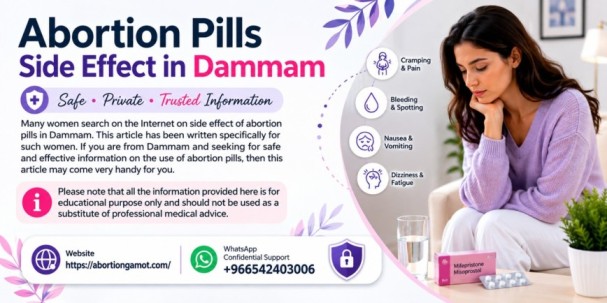
Many women search on the Internet on side effect of abortion pills in Dammam. This article has been written specifically for such women. If you are from Dammam and seeking for safe and effective information on the use of abortion pills, then this article may come very handy for you.
Please note that all the information provided here is for educational purpose only and should not be used as a substitute of professional medical advice.
Introduction to Women’s Healthcare in Dammam
As the capital city of the Eastern Province of Saudi Arabia, Dammam is a center for expanding healthcare options for women through Dammam’s women’s healthcare network. There are many resources that have been provided for women seeking any type of reproductive health service, including government hospitals as well as specialized clinics.
Regardless of whether your concerns involve pregnancy healthcare issues, general gynaecology or recovery after a suggested procedure, being knowledgeable about the services at hand, as well as learning how to safely access these options, is an important first step.
Important Health Service Facilities in Dammam
• King Fahd University Hospital (KFUH) – Primary healthcare provider for obstetric and gynaecology services in the Eastern Province.
• King Abdulaziz Hospital – Government hospital specializing in maternity and women’s health services.
• Dammam Medical Complex – One of the largest public facilities within the Eastern Province.
• Ministry of Health (MOH) Clinics – Women’s health clinics under the auspices of MOH providing general healthcare services.
• Private specialized clinics in Dammam, Al-Khobar, and Dhahran for women’s health services.
Abortion Pills and Their Mechanism of Action
From a medical perspective, ‘abortion pills’ can be defined as a combination of drugs, predominantly Mifepristone and Misoprostol, which are used under medical observation for managing some pregnancy-related problems. It should be emphasized that their mechanism of action is based on the modulation of hormonal signals and consequent shedding of pregnancy tissues.
As it follows from the Saudi Health Laws and Islamic Medical Ethics requirements, it is extremely crucial to emphasize that in Saudi Arabia, as well as in the city of Dammam, any utilization of these drugs is strictly regulated according to the aforementioned standards. To be more precise, their administration is permitted in accordance with the rules stated only for specific indications, such as an incomplete miscarriage management and some obstetric emergencies.
Important Legal Notice: The self-administration or unsupervised use of these medications is prohibited under Saudi law. This information is provided strictly for educational and patient awareness purposes.
Abortion Pills Side Effects in Dammam: A Medical Perspective
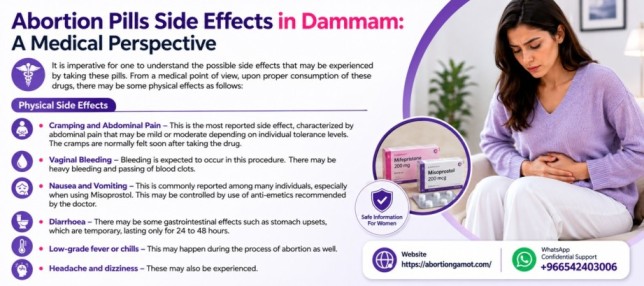
It is imperative for one to understand the possible side effects that may be experienced by taking these pills. From a medical point of view, upon proper consumption of these drugs, there may be some physical effects as follows:
Physical Side Effects
• Cramping and Abdominal Pain – This is the most reported side effect, characterized by abdominal pain that may be mild or moderate depending on individual tolerance levels. The cramps are normally felt soon after taking the drug.
• Vaginal Bleeding – Bleeding is expected to occur in this procedure. There may be heavy bleeding and passing of blood clots.
• Nausea and Vomiting – This is commonly reported among many individuals, especially when using Misoprostol. This may be controlled by use of anti-emetics recommended by the doctor.
• Diarrhoea – There may be some gastrointestinal effects such as stomach upsets, which are temporary, lasting only for 24 to 48 hours.
• Low-grade fever or chills – This may happen during the process of abortion as well.
• Headache and dizziness – These may also be experienced.
Other Less Frequent but Significant Complications
• Excessive or Persistent Bleeding – This condition requires urgent attention. You need to go to the hospital if you have excessive bleeding, soaking more than two sanitary pads an hour for two consecutive hours.
• Indication of Infection – You need to consult your physician if there is fever that exceeds 38.5 °C, offensive discharge, or extreme abdominal pain.
• Incompleteness of Procedure – Sometimes, depending on circumstances, there is a need for surgical removal of tissues if complete elimination does not occur.
• Reaction to Drugs – It can lead to an allergic reaction such as rash, itchiness, or difficulty in breathing.
Emotional and Psychological Impact
Women are allowed to undergo all kinds of emotions after reproductive health procedures. The emotions can vary from sadness, relief, fear, or confusion. It is highly recommended to use women’s health resources and seek counselling services in case of emotional distress. There are various private hospitals for women in Dammam.
Medical Safety Awareness: When to Seek Emergency Assistance
Medical safety awareness does not only mean understanding the side effects; rather, it means understanding when the side effects become indications that there is an issue needing medical intervention. If you are under medical supervision and you observe the following symptoms, seek immediate consultation from your healthcare practitioner or visit the nearest hospital emergency room:
• Body temperature of more than 38.5°C after 24 hours of taking the medications
• Extreme or worsening pain in the abdominal area or back which cannot be relieved through prescribed medications
• Usage of more than two sanitary pads per hour for two hours consecutively
• Vaginal discharge that smells bad
• Lack of menstruation within 24 hours after taking the medicines (to be verified by your physician)
According to Dr. Mary (specialist for abortion), it is important that each patient schedule a post-abortion follow-up checkup prior to leaving the clinic.
Reproductive Health Information: Safe Practices
Access to reproductive health information helps women make good choices and ensure their recovery. Below is what reproductive health guidelines for women in Dammam always include regarding post-procedure health practices:
Post-Procedures Care Tips
• Allow yourself time for resting for at least 24 to 48 hours after your procedures.
• No strenuous activity, including exercising or lifting weights for a week.
• Do not use tampons; use only sanitary pads during the first two to three weeks after procedure.
• No swimming pools or any other body of water for two weeks.
• Attend all follow-up appointments that have been arranged for you by your medical staff.
• Take prescribed medications, including antibiotics and analgesics as recommended.
• Maintain proper nutrition and ensure adequate fluid intake for quick healing.
Recovery Includes Emotional Wellbeing as Well
Recovery is not restricted to just physical health. Utilizing healthcare assistance programs alongside discussing your problem with a person you trust, like a counselor, a supportive family member, or a women’s healthcare professional, could be considered for your recovery process. Healthcare centers in Dammam offer educational pamphlets to patients together with consultation after surgery.
Confidential Women’s Care in Dammam: Your Rights as a Patient
All female residents of Dammam have the right to seek confidential care services. As stipulated in the Patient’s Rights Charter of the Saudi Ministry of Health, each patient is entitled to confidentiality, privacy, dignity, and the right to be informed of all medical details.
You have the right to inquire from your physician or nurses about your treatment, side effects, and recovery process freely and openly. You can inquire about anything you do not understand.
Healthcare Contacts – Resources in Dammam
• Ministry of Health Helpline for Patients in Saudi Arabia: 937 (Available 24/7)
• Dammam Medical Complex, Eastern Province, King Fahd Road, Dammam
• King Fahd University Hospital, Al Khobar – Contact Number: +966 13 896 0000
• King Abdulaziz Hospital, Dammam – MOH Facility
• Ministry of Health Portal – Maternal and Women’s Health: www.moh.gov.sa
• National Mental Health Hotline: 920033360
Legal & Ethical Environment in Saudi Arabia (Dammam)
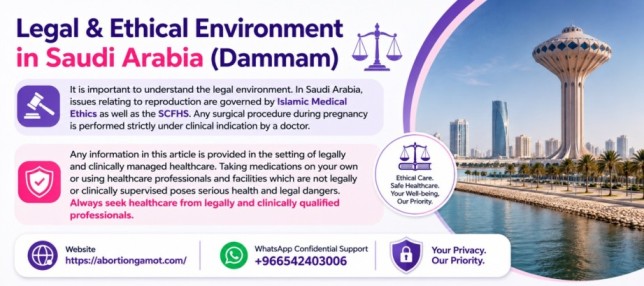
It is important to understand the legal environment. In Saudi Arabia, issues relating to reproduction are governed by Islamic Medical Ethics as well as the SCFHS. Any surgical procedure during pregnancy is performed strictly under clinical indication by a doctor.
Any information in this article is provided in the setting of legally and clinically managed healthcare. Taking medications on your own or using healthcare professionals and facilities which are not legally or clinically supervised poses serious health and legal dangers. Always seek healthcare from legally and clinically qualified professionals.
Qualified Medical References
Reference: Dr. Mary, Abortion Specialist, says that educating a woman on matters related to her health is paramount. Any time you experience any effects after a clinical procedure you should not fail to reach out to your clinic or hospital immediately. This will always be the best thing to do. Contact Us Dr. Marry
References & Sources
1. Abortion Guide – Advice from Doctors about Medical and Abortion Related Health Issues | Women’s Reproductive Health Information Service
2. Saudi Ministry of Health (MOH) – Rights of Patients and Guidelines for Women’s Health Care | www.moh.gov.sa
3. King Fahd University Hospital, Eastern Region – Obstetric and Gynaecological Clinic
4. Dammam Medical Complex – Official Health Services for Women, Eastern Region, Kingdom of Saudi Arabia
5. Dr. Mary, Specialized Abortion Doctor – Commentaries on Safe Reproductive Health Care
6. Saudi Commission for Health Specialties (SCFHS) – Regulatory Standards for Reproductive Health Care Services
7. World Health Organization (WHO) – Safe Abortion: Technical and Policy Guidance for Health Systems
Frequently Asked Questions (FAQ)
1: Abortion Pills Side Effects In Dammam
The side effects of abortion pills in Dammam, if provided by a duly licensed healthcare practitioner, are likely to include cramps, bleeding, nausea, and tiredness. In case of side effects that are too severe or prolonged, patients need to see a doctor immediately.
2: Legality of This Care in Dammam
This care is legally available in Dammam through licensed hospitals and clinics where licensed practitioners provide medically induced abortions according to laws in place with the Ministry of Health and Islamic medicine ethics.
3: How Long Do Side Effects Last?
Most side effects, including cramps, will resolve within one to two weeks after receiving abortion pills in Dammam. Side effects that last for more than two weeks need to be consulted with a licensed physician immediately.
4: Situations to Go to the Emergency Room
Cases where patients are showing signs of having a fever of over 38.5 degrees, soaking two pads per hour, severe abdominal pains, infections, or shock need to see an emergency healthcare practitioner immediately.
Q5: Is my information protected?
Yes. All patients in the kingdom have the right to privacy, and according to the Saudi Patient Rights Charter, all clinics and hospitals have an obligation to protect the health information of their clients.
Q6: How can I access psychological counseling in Dammam?
Several private clinics and the National Mental Health Helpline (920033360) provide you with psychological support that is confidential. Women’s health support is available in Arabic and English.
Q7: Am I allowed to visit clinics alone?
Yes. There are many clinics in Dammam where women are provided with reproductive health services independently without needing to take anyone with you. You are advised to carry your Saudi ID or Iqama along with medical files.
Q8: Whom should I get in touch for advice first?
Please contact Saudi Ministry of Health helpline (available 24/7) through the toll-free number 937. Alternatively, you can go to a healthcare center near your place for referral. Choose a licensed clinic only.
Q9: Is there any follow-up after treatment?
Yes. It is important to have follow-ups which will be arranged by the medical staff after 7 to 14 days from the date of the procedure.
Q10: What if I cannot afford private hospital prices?
There are government hospitals that offer medical services for women such as the Dammam Medical Complex and King Abdulaziz Hospital. This facility can be availed by Saudi citizens and qualified residents of the country at subsidised or even free rates.
Conclusion: Your Health, Your Safety
The abortion pills side effects in Dammam are nothing to be scared about; they are just information that needs to be learned so you are prepared for any possible scenarios that may arise.
It is your right as a woman in Dammam to be provided with all kinds of health information so that you can be well-equipped in terms of your overall health and safety.
If you would like to get additional information about pregnancy care information, women’s health assistance, and supervised reproductive care, then it is now high time for you to get the assistance of a licensed healthcare provider.
You are worthy of all the healthcare professionals who are there to help guide you with all your worries.
There are various institutions within Dammam where you may seek medical advice on women’s healthcare information. You may choose either to visit government hospitals, MOH centers, or even private facilities.
But for more information, call the Saudi Ministry of Health hotlines at 937.
Medical Disclaimer
The above article was written solely for educational and informative purposes. It does not provide any form of medical advice, diagnosis, or treatment. The information contained within this document was published in strict adherence to the relevant Saudi Arabia laws and regulations of the Ministry of Health. For personalized medical consultation, please contact a qualified health care provider.